


Efficacy of Xanomeline on Cognitive Dysfunction
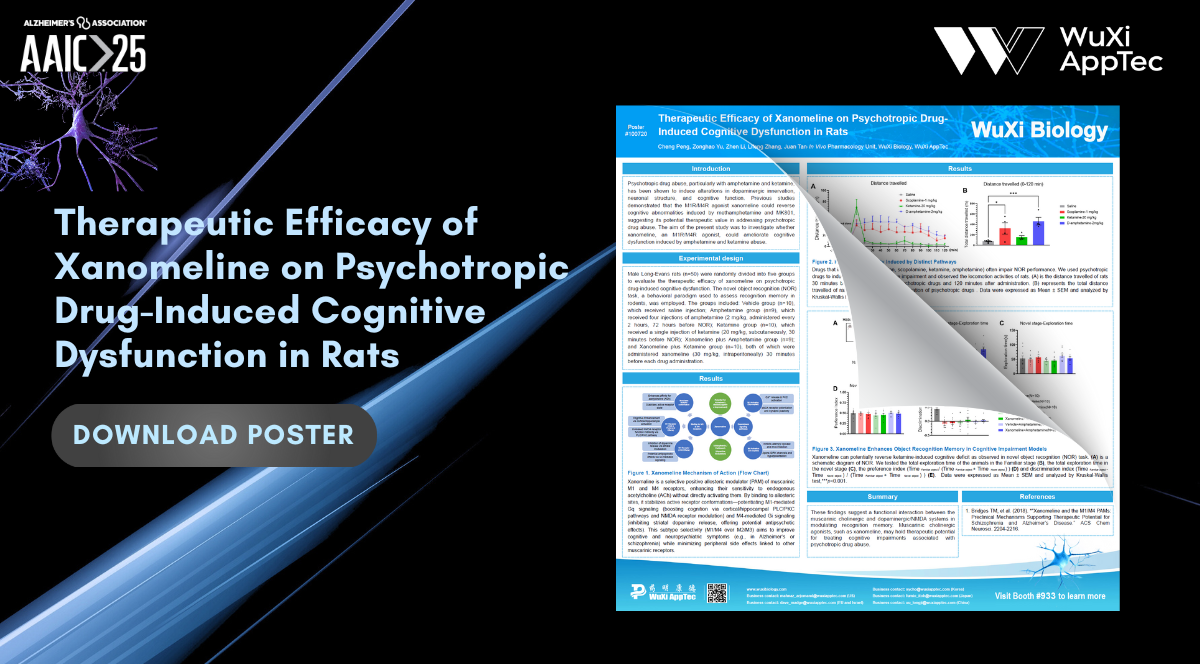
Psychotropic drug abuse, particularly involving amphetamines and ketamine, has been shown to induce alterations in dopaminergic innervation, neuronal structure, and cognitive function. For AAIC 2025, WuXi Biology showcased a poster on a study that investigated whether xanomeline, an M1/M4 muscarinic receptor agonist, could ameliorate cognitive dysfunction induced by amphetamine and ketamine abuse.
Drugs that increase hyperlocomotion (scopolamine, ketamine, amphetamine) often impair novel object recognition (NOR) performance in rodents. In this study, the authors demonstrate that xanomeline enhanced object recognition memory in a rat cognitive impairment model, suggesting that muscarinic receptor agonists may hold therapeutic potential for treating cognitive impairments associated with psychotropic drug abuse.
Poster_AAIC 2025_Therapeutic Efficacy of Xanomeline on Cognitive Dysfunction
Related Content
Oligonucleotide therapeutics represent a transformative treatment modality with demonstrated potential across metabolic disorders, CNS diseases, muscular dystrophies, and a broad...
VIEW RESOURCECognitive dysfunction affects over 50 million individuals worldwide, with Alzheimer’s disease (AD) representing two-thirds of cases. Due to the complexity...
VIEW RESOURCE