


Efficacy of a TL1A Antibody in an Acute Colitis Mouse Model
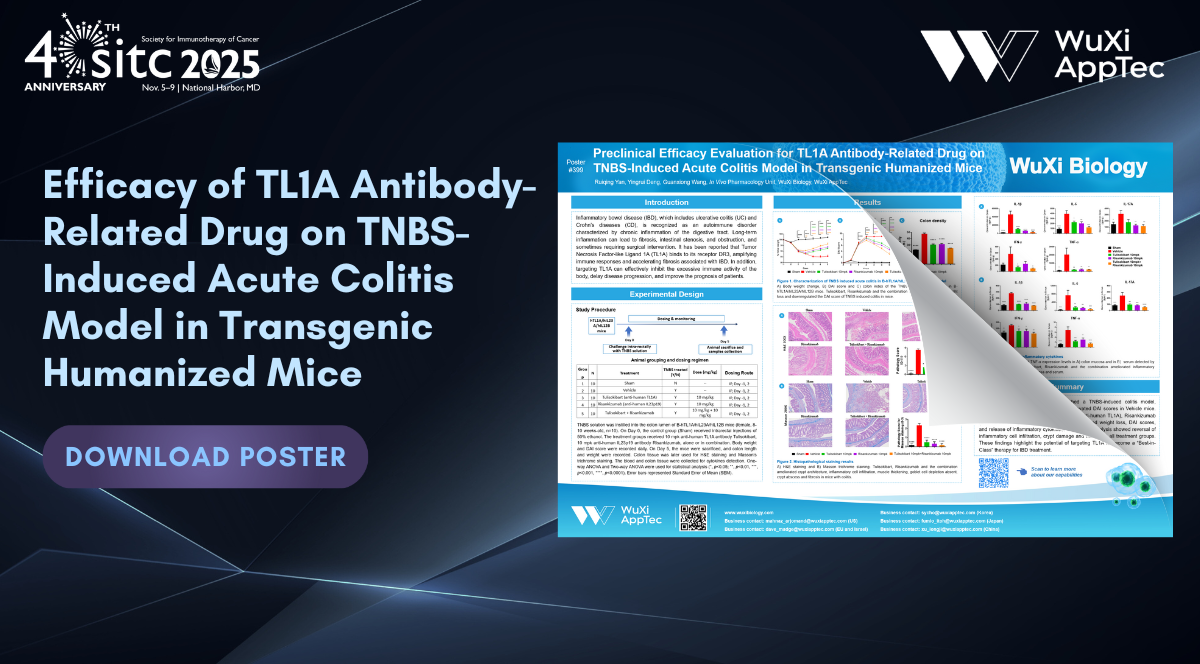
Inflammatory bowel disease (IBD), which includes ulcerative colitis and Crohn’s disease, is a chronic, immune-mediated disorder characterized by persistent inflammation of the digestive tract. Tumor Necrosis Factor-like Ligand 1A (TL1A) binds to its receptor DR3, and this interaction amplifies immune responses and accelerates fibrosis, which are key components of IBD. Studies have shown that targeting TL1A can inhibit excessive immune activity, delay IBD progression, and improve patient prognosis.
To support research focused on the development of new therapies for treating IBD, WuXi Biology presented a poster at SITC 2025 describing the establishment of an acute colitis model in transgenic humanized mice. The authors show that treatment with tulisokibart (anti-human TL1A), risankizumab (anti-human IL23p19), or their combination reduced weight loss, DAI scores, and release of inflammatory cytokines in this model. Histological analysis showed reversal of inflammatory cell infiltration, crypt damage, and fibrosis in all treatment groups.
Poster_SITC 2025_Efficacy of TL1A Antibody-Related Drug on TNBS-Induced Acute Colitis Model
Related Content
From hematologic malignancies to solid tumors Introduction: Amid a surge of advancements in immunotherapy, T cell engager (TCE) therapy has...
VIEW RESOURCEAntibody-targeted therapies—including antibody-drug conjugates (ADCs), antibody-oligonucleotide conjugates (AOCs), and degrader-antibody conjugates (DACs)—are reshaping precision medicine by enabling highly selective delivery...
VIEW RESOURCE