


BaF3 Models Carrying HER2 Mutations
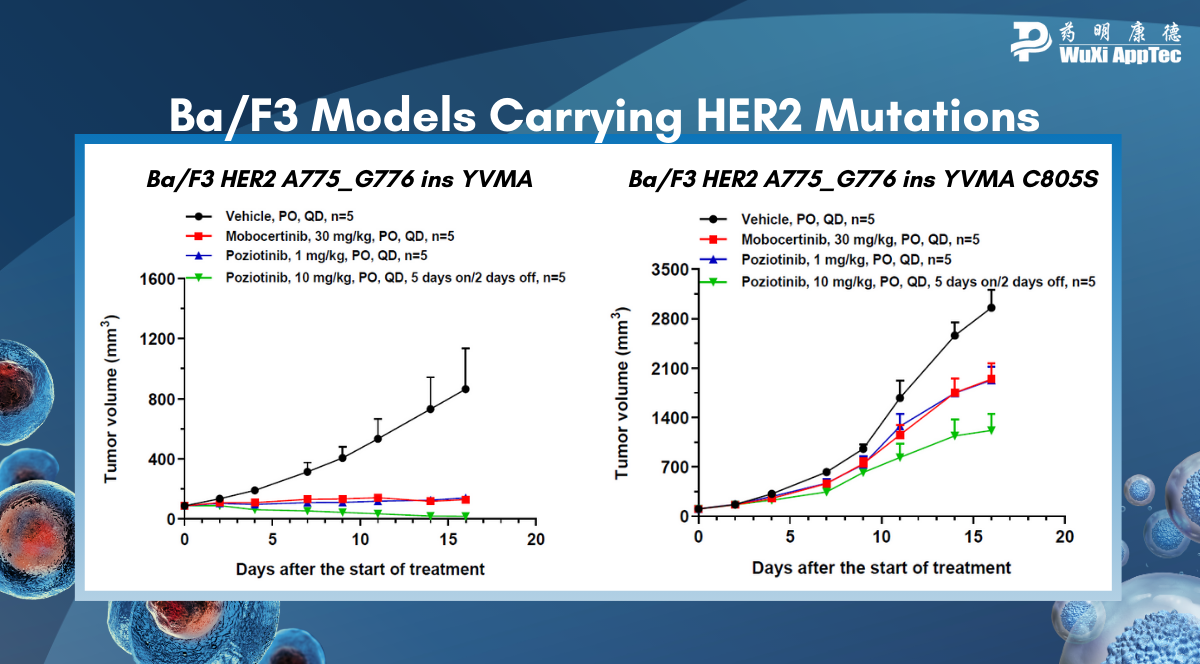
Frequently observed in NSCLC patients, the 4 amino acid YVMA insertion is the most common type of HER2 exon 20 insertion mutation. A secondary mutation, C805S, often develops as a mechanism of resistance to HER2 tyrosine kinase inhibitors (TKIs) such as poziotinib, where the C805 residue is crucial for drug binding. The presence of a YVMA insertion with a C805S secondary mutation can significantly limit the effectiveness of standard HER2 TKIs, making treatment selection more complex. Cancer cells with this mutation profile may show resistance to many HER2-targeted drugs, potentially requiring alternative treatment strategies.
To support the development of next-generation therapeutics to overcome this resistance, WuXi Biology has established Ba/F3 cell lines and in vivo models carrying the YVMA insertion and C805S point mutation.

BaF3 Model_HER2 Exon 20 YVMA Insertion and C805S Secondary Mutation
Related Content
Inflammatory bowel disease (IBD), which includes ulcerative colitis and Crohn’s disease, is a chronic, immune-mediated disorder characterized by persistent inflammation...
VIEW RESOURCEStrategies to stimulate dendritic cell (DC) activity, such as ex vivo generation and priming of DC vaccines, have been explored...
VIEW RESOURCE