


A Novel Murine Model of MetALD for Therapeutic Drug Evaluation
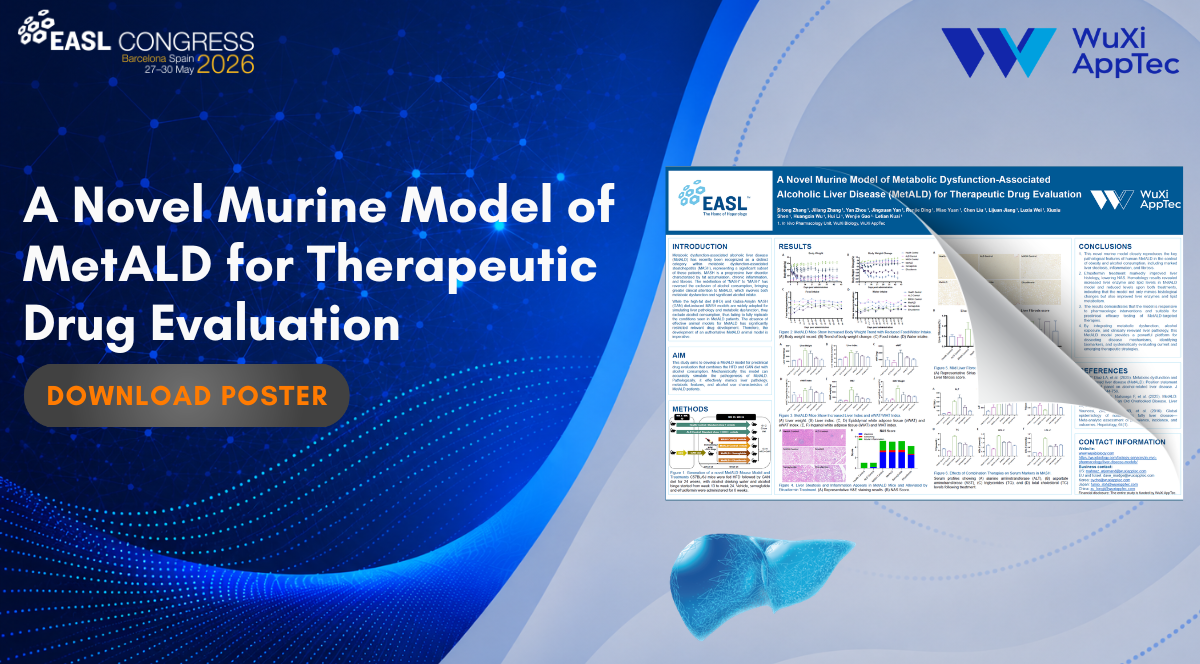
Metabolic dysfunction-associated alcohol-related liver disease (MetALD) presents unique challenges for preclinical drug development, requiring models that capture the combined effects of metabolic dysfunction and alcohol exposure.
At EASL 2026, WuXi Biology presented a novel murine MetALD model that incorporates both features, reproducing key hallmarks of human disease, including hepatic steatosis, inflammation, fibrosis, and metabolic abnormalities.
Importantly, treatment with efruxifermin markedly improved liver histology, reduced NAS, and improved liver enzyme and lipid profiles, demonstrating that the model is responsive to pharmacologic intervention and supporting its use for preclinical efficacy evaluation of MetALD therapies.
By integrating obesity, alcohol exposure, and clinically relevant liver pathology, this novel murine model provides a preclinical platform to investigate disease mechanisms, identify biomarkers, and evaluate emerging therapeutic strategies for MetALD.
Poster_EASL_Novel Murine Model of MetALD for Therapeutic Drug Evaluation
Related Content
Advancing metabolic disease therapies requires more than demonstrating efficacy. Translational relevance, drug metabolism, tolerability, and safety all help shape candidate...
VIEW RESOURCEMetabolic dysfunction-associated steatohepatitis (MASH) remains a significant global health challenge, driven by a complex interplay of lipid dysregulation, inflammation, and...
VIEW RESOURCE