


Therapeutics for Alzheimer’s Using Antidiabetic Drugs
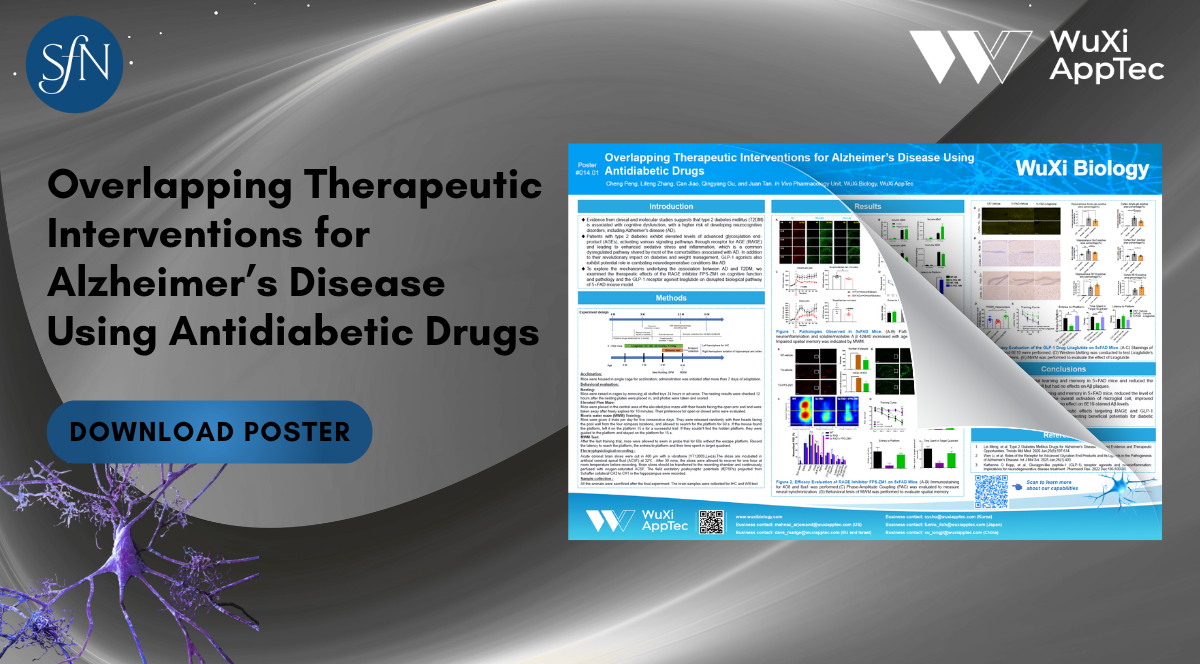
Evidence suggests that type 2 diabetes mellitus (T2DM) is associated with cognitive dysfunction and an increased risk of developing neurocognitive disorders, including Alzheimer’s disease (AD). Patients with T2DM exhibit elevated levels of advanced glycation end-products (AGEs), which activate multiple signaling pathways by binding to the receptor for AGE (RAGE), thereby increasing oxidative stress and inflammation. Chronic inflammation and oxidative stress are widely recognized as common dysregulated pathways shared by most of the comorbidities associated with Alzheimer’s disease (AD).
To explore the mechanisms underlying the association between AD and T2DM, WuXi Biology presented a poster at Neuroscience 2025 examining the therapeutic effects of the RAGE inhibitor FPS-ZM1 on cognitive function and pathology, and of the GLP-1 receptor agonist liraglutide on the counteraction of key disrupted biological pathways in the 5xFAD mouse model. Findings from this study support overlapping therapeutic effects on the RAGE and GLP-1 pathways with FPS-ZM1 and liraglutide, suggesting potential benefits for diabetic patients with AD.
Poster_SFN 2025_Overlapping Therapeutic Interventions for Alzheimer’s
Related Content
CNS drug development remains one of the most complex challenges in biopharmaceutical research—from target validation and brain exposure to translational...
VIEW RESOURCESubstance Addiction Models and Pharmacodynamic Evaluation of Semaglutide in the Treatment of Substance Use Disorders OncoWuXi Express will continue to...
VIEW RESOURCE