


Targeted In Vitro Pharmacology for GIPR/GLP-1R/GCGR

Current weight-loss therapies primarily act on the gut–brain axis, often using incretin-based approaches such as GIP, GLP-1, and glucagon receptor agonists—either alone or in combination. These therapies support weight loss and improve type 2 diabetes by enhancing insulin secretion, slowing gastric emptying, and reducing appetite, reflecting an evolving understanding of obesity and metabolic regulation.
To address the growing demand for research on weight loss and type 2 diabetes, WuXi Biology provides robust capabilities in hit identification, hit confirmation, and hit-to-lead optimization, leveraging both our proprietary compound libraries and custom-designed collections. We have built a suite of in-house cell lines expressing key targets—including GIPR, GLP-1R, GLP-2R, and GCGR—across multiple species.
Additionally, we have established GSIS (glucose-stimulated insulin secretion) assays in INS-1 832/3 cells, as well as cAMP HTRF and GSIS assays in EndoC-BH5 human pancreatic beta cells, providing more physiologically relevant insights than traditional immortalized cell lines.
At DDC 2026, WuXi Biology presented a poster showing how these capabilities support the growing needs of research teams working on weight-loss and type 2 diabetes drug discovery.
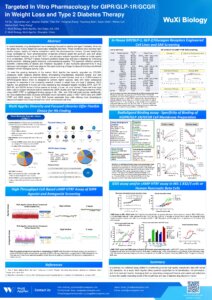
Poster_DDC 2026_Targeted In Vitro Pharmacology for GIPR-GLP1R-GCGR in Weight Loss and Type 2 Diabetes Therapy
Related Content
Advancing metabolic disease therapies requires more than demonstrating efficacy. Translational relevance, drug metabolism, tolerability, and safety all help shape candidate...
VIEW RESOURCEMetabolic dysfunction-associated alcohol-related liver disease (MetALD) presents unique challenges for preclinical drug development, requiring models that capture the combined effects...
VIEW RESOURCE