


OncoWuXi Express: PSMA Overexpressing PC3 Tumor Model
Introduction:
OncoWuXi Express will continue to keep you informed about updates to our on-line tumor model database (OncoWuXi Database), as well as our recent progress in cancer and autoimmune research. In this issue, we would like to share with you the newly established PSMA-overexpressing PC3 prostate cancer model.

https://onco.wuxiapptec.com
Globally, prostate cancer stands not only as the second-most common cancer among men, but also the most frequently diagnosed noncutaneous cancer, with a steadily increasing morbidity and mortality rate. Thus, accurate diagnosis, staging, and effective personalized treatment methods become vitally important. Prostate-specific membrane antigen (PSMA), a type II transmembrane glycoprotein encoded by the folate hydrolase 1 gene (FOLH1), is notably overexpressed in prostate cancer cells. PSMA is biologically linked to high-grade prostate cancer and advanced disease, and its expression can be altered by systemic hormonal therapies (Figure 1) [1]. Higher PSMA expression, as determined by immunohistochemistry, has been associated with poorer survival outcomes compared to patients with low PSMA expression [2]. The recent approval of 177Lu-PSMA-617 by the US Food and Drug Administration for the treatment of metastatic castration-resistant prostate cancer progressing after chemotherapy, has confirmed the significant value of PSMA-targeted therapy. Non-radiopharmaceutical-based PSMA-targeted therapies such as bispecific antibodies, antibody-drug conjugates, and CAR T cells are also under evaluation. Thus, research into PSMA-directed drugs will help to further understand the characteristics of prostate cancer biology for the development of more effective treatments.
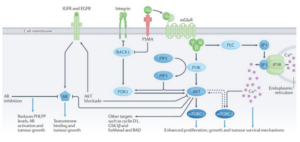
Figure 1. The influence of PSMA activation on cell pathways [1]
To aid in the discovery of PSMA-targeted drugs, we have established a PSMA-overexpressing PC3 prostate cancer model by lentivirus transduction. Initially, we detected PSMA protein expression in three monoclonal PC3-PSMA cell lines (SC-1, SC-2 and SC-3) using western blot analysis (Figure 2A). Compared with parental PC3 cells (PC3-Par), all three clones express high-level PSMA expression. We chose the clone (SC-2) with the highest level of PSMA expression and evaluated its tumorigenesis in BALB/c nude mice (Figure 2C). Body weight was not obviously impacted by the xenograft tumor (Figure 2D). At the end of in vivo monitoring, tumor tissues were collected from animals and assessed by western blot. The results showed that PSMA protein was stably and highly-expressed in tumors (Figure 2B).
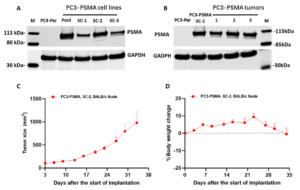
Figure 2. Evaluation of PSMA protein expression and in vivo tumorigenesis of PC3-PSMA cells.
As demonstrated by the results above, the established PC3-PSMA cell line expresses high levels of PSMA both in vitro and in vivo. This model could serve as an ideal tool for the development of novel PSMA-targeting therapeutic molecules.
References:
[1] Roberts, Matthew J et al. “Using PSMA imaging for prognostication in localized and advanced prostate cancer.” Nature reviews. Urology vol. 20,1 (2023): 23-47. doi:10.1038/s41585-022-00670-6.
[2] Hupe MC et al. “Expression of Prostate-Specific Membrane Antigen (PSMA) on Biopsies Is an Independent Risk Stratifier of Prostate Cancer Patients at Time of Initial Diagnosis”. Front Oncol. 2018 Dec 20;8:623. doi: 10.3389/fonc.2018.00623.
Technical contact:
Pharmacology-BD-Translation@wuxiapptec.com
Business contacts:
xu_longji@wuxiapptec.com (China)
Mahnaz_Arjomand@wuxiapptec.com (US)
dave_madge@wuxiapptec.com (Europe)
sycho@wuxiapptec.com (Korea)
fumio_itoh@wuxiapptec.com (Japan)
Register for our OncoWuXi Database via the following website or by scanning the QR code to search for more information about oncology and immunology related models.

https://onco.wuxiapptec.com
WuXi AppTec | Oncology Platform:
Related Content
Many oncology drug candidates with promising preclinical activity ultimately fail because safety liabilities emerge too late in development. An integrated...
VIEW RESOURCEBispecific antibodies have emerged as an important modality in oncology, although their broader application can be limited by manufacturing complexity...
VIEW RESOURCE