


Intra-carotid artery brain metastasis models for the evaluation of lung and breast cancer drugs
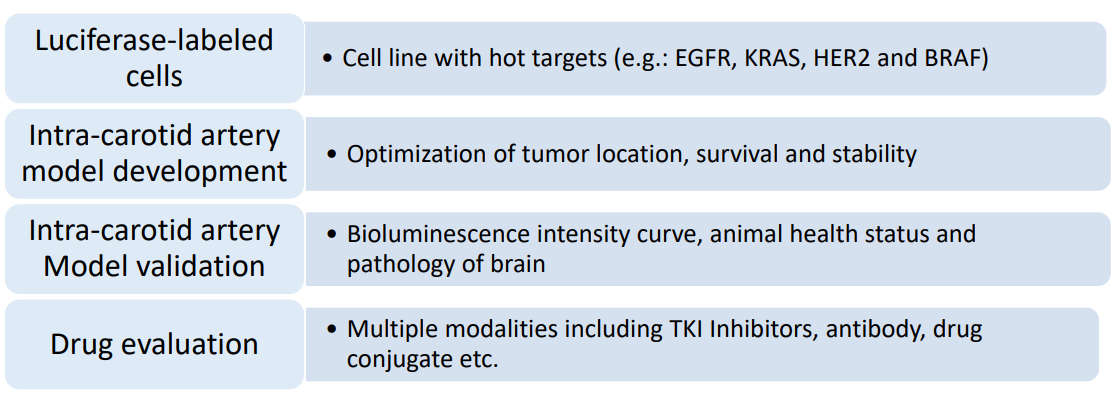
Non-CNS metastatic brain cancer is approximately 10 times more common than CNS cancer. Lung cancer and breast cancer account for most brain metastasis. KRAS-mutant NSCLC composes a third lung adenocarcinoma, among which 17% to 55% will develop brain metastases. Likewise, more than a third HER2-positive breast cancer will develop brain metastasis. Among existing animal models, the ectopic injection in brain cannot reflect the mechanism of tumor invasion and metastasis, while tail vein and intra-cardiac injection usually produces extra-cerebral metastatic disease and the animals have to be sacrificed before brain metastases appears.
Intra-carotid artery brain metastasis models can provide a better observation opportunity compared to intra-cardiac models, and can better mimic the penetration through the blood brain barrier (BBB), compared to ectopic models. We have developed a panel of intra-carotid artery brain metastatic models for drug evaluation, and demonstrated their superiority in growth kinetics and the brain microenvironment. These models can be a promising predictive tool for novel drug/modality discovery for targeting brain metastasis.
3 Brain metastasis ICA model_5988 _Fuyang
Related Content
Inflammatory bowel disease (IBD), which includes ulcerative colitis and Crohn’s disease, is a chronic, immune-mediated disorder characterized by persistent inflammation...
VIEW RESOURCEStrategies to stimulate dendritic cell (DC) activity, such as ex vivo generation and priming of DC vaccines, have been explored...
VIEW RESOURCE