


Efficacy of Biologics in Humanized Mouse Models for IBD
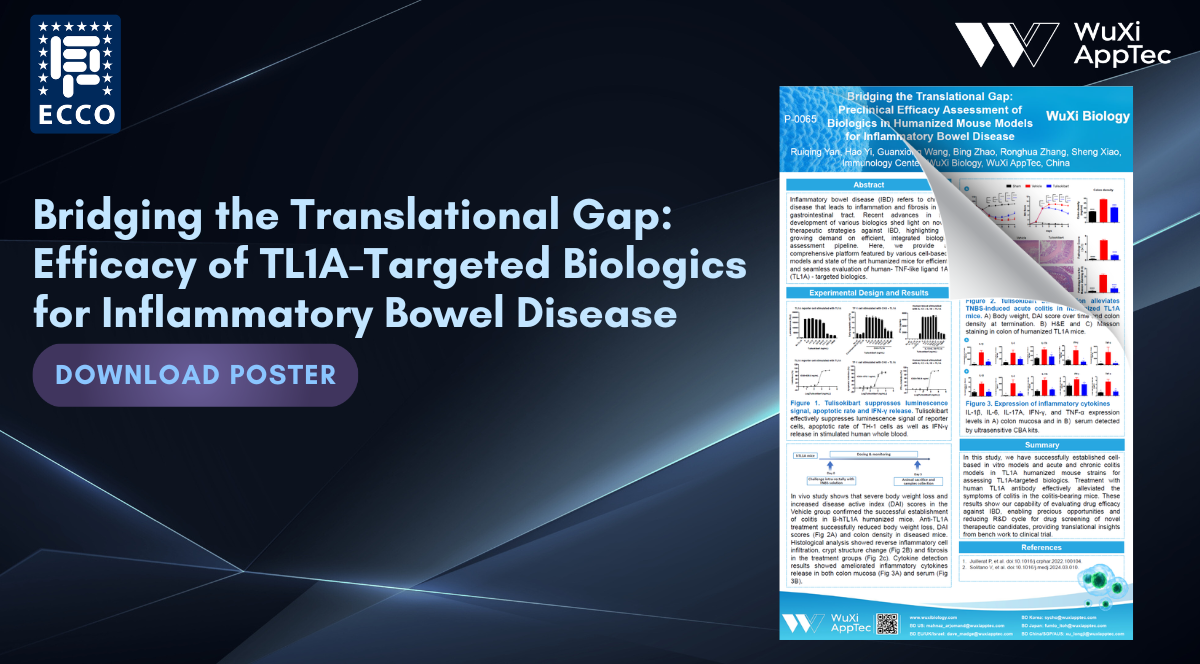
Inflammatory bowel disease (IBD), which includes ulcerative colitis and Crohn’s disease, is a chronic, immune-mediated disorder characterized by persistent inflammation of the digestive tract. Tumor Necrosis Factor-like Ligand 1A (TL1A) binds its receptor, and this interaction amplifies immune responses and accelerates fibrosis, both key components of IBD. Studies have shown that targeting TL1A can inhibit excessive immune activity, delay IBD progression, and improve patient prognosis.
To support research focused on developing new therapies for IBD, WuXi Biology presented a poster at ECCO 2026 describing the establishment of cell-based in vitro models and acute and chronic colitis models in TL1A humanized mouse strains to assess TL1A-targeted biologics. The authors show that treatment with a human TL1A antibody effectively alleviated the symptoms of colitis in the colitis-bearing mice.
Poster_ECCO 2026_IBD_TL1A-targeted biologics in humanized mice
Related Content
Introduction: Autoimmune skin diseases (AISDs) are a group of chronic inflammatory disorders characterized by the immune system mistakenly recognizing self-antigens...
VIEW RESOURCEInflammatory bowel disease (IBD), which includes ulcerative colitis and Crohn’s disease, is a chronic, immune-mediated disorder characterized by persistent inflammation...
VIEW RESOURCE