


Radionuclide Drug Conjugates (RDCs)
Providing integrated pre-clinical services, hit finding, conjugate preparation,
in vitro/in vivo evaluation in oncology and immuno-oncology.
in vitro/in vivo evaluation in oncology and immuno-oncology.
Integrated pre-clinical RDC services
Radionuclide Drug Conjugates (RDCs) unite radionuclides, chelators, linkers, and targeting molecules, allowing radiation to be delivered directly to tumor cells. This targeted mechanism leverages direct DNA damage to overcome conventional drug resistance while enabling simultaneous therapeutic evaluation and precise tumor imaging. WuXi Biology offers an integrated preclinical RDC platform, featuring diverse ligand screening, complex conjugate preparation, and cutting-edge molecular imaging to accelerate your discovery.

RDCs Discovery
- Ligand discovery and RDC synthesis
- In vitro evaluation
- In vivo evaluation

Ligand discovery and RDC synthesis
Hit finding platforms for targeting moiety discovery in RDCs
Learn more about in vitro screening platform

Tracking Records
• 15+ years of experience• 1800+ clients
• 1000+ target screened
• 2200+ proteins produced
• Screen successful rate >90%
• Validated hit from DEL directly entered the Phase III clinical trials
• Strongest hit (KD = 312 pM) identified via DEL
RDC conjugation services

Chelators
- Wide range of chelators, including DFO, DTPA, and custom options (Figure 1)
- 3-week average turnaround for chelator synthesis, including complex ones like DFO (>95% purity)

Radiochemical labelling and quantitative
- Expertise in both hot and cold metal chelation
- Advanced methods for radiolabeling and synthesis of radiopharmaceutical compounds
- Access to over 20 different radionuclides for diverse applications
- iTLC, Radio-HPLC for QC
- Gamma Counter for radioactivity quantitative measurement
- Raw data archiving on NAS 480T
License issued RDCs
18F, 11C, 68Ga, 64Cu, 89Zr, 123I, 13N, 131I, 177Lu, 90Y, 124I, 32P, 99mTc, 227Th, 225Ac, 223Ra, 203Pb, 212Pb, 211At, 213Bi.

In Vitro evaluation of RDC
Learn more about in vitro biology services
Our capabilities
Membrane Target Assay Capabilities
- Target binding affinity
- Cellular internalization and localization
- Target kinetics: competition, on/off rate
Target-Related Studies
- Functional markers of receptor signaling events
- Apoptosis / Necrosis / DNA damage assessment
- Generic biochemical / cellular assays
Cost-Effective Assay Options for RDC
- 3H / 14C / 125I based high-throughput screening
- Cold-labeled time-resolved fluorescence assay
In Vitro Pharmacology
- Short-term killing assessment (metabolic activity)
- Long-term proliferation inhibition (colony formation, 3D culture spheroid system)
- Radiation sensitization / drug resistance evaluation
- Human iPSC-induced organoid assay systems for in vitro toxicity evaluation (for salivary gland / Proximal renal tubule, and more…)
Customized Assays Upon Requests….
- With extensive experiences on 100+ membrane targets of multiple classes, our team is prepared for emerging first-in-class RDC targets from our clients
In Vitro binding and internalization assay of 177Lu-RDC

Binding and internalization of 177Lu-RDC to prostate cancer cells with different PSMA expression level. Cells were incubated with 177-Lu-RDC for certain time courses at designated concentrations (Figure 3); specific binding, internalization and kinetic trends of 177Lu-RDC were determined after washing (Figure 4).
In Vivo evaluation of RDC
Learn more about in vivo models
Our capabilities
Targeted oncology
• 413 CDXs/30 cancer types• 1,500+ PDXs/25 cancer types
• Well annotated with High-throughput decoding
• Response data by SOC and other drugs
Immuno-oncology
• 92 Syngeneic models/21 cancer types• Transgenic mice for 30+ targets
• 90+ PBMC/HSC humanized models
Translational models
• 63 Orthotopic models/15 cancer types• 95 Metastatic models/10 cancer types
• 160+ Drug resistant models
• Beyond mouse : hamster and rat
Informative online database
• 1,800+ Model datasets• Growth kinetics: 3,000
• Histopathology: 2,800
• Pharmacological sensitivity: 4,000
Cutting-edge imaging equipment

Micro PET-CT
High‑throughput imaging by scanning up to four mice

γ counter
12 NaI well-type detectors for high throughput and performance

PET-CT for Large Models
Total-body imaging improve quantitative accuracy and small lesion detectability
Case Study
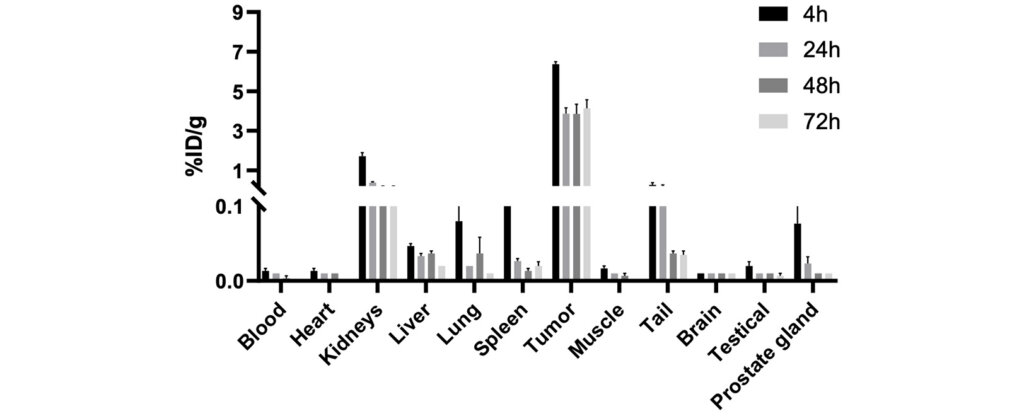
Biodistribution study by γ-counter
177Lu-RDC biodistribution study in LNCap model
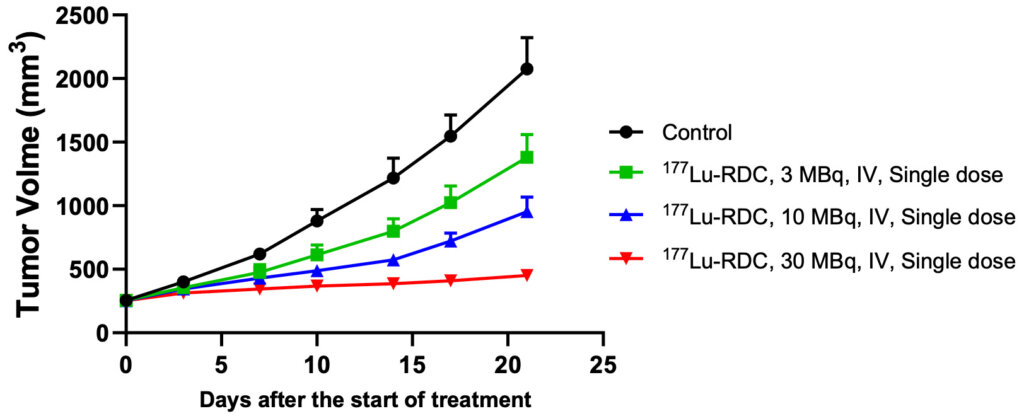
Efficacy study of 177Lu-RDC
177Lu-RDC efficacy study in mice bearing LNCaP model
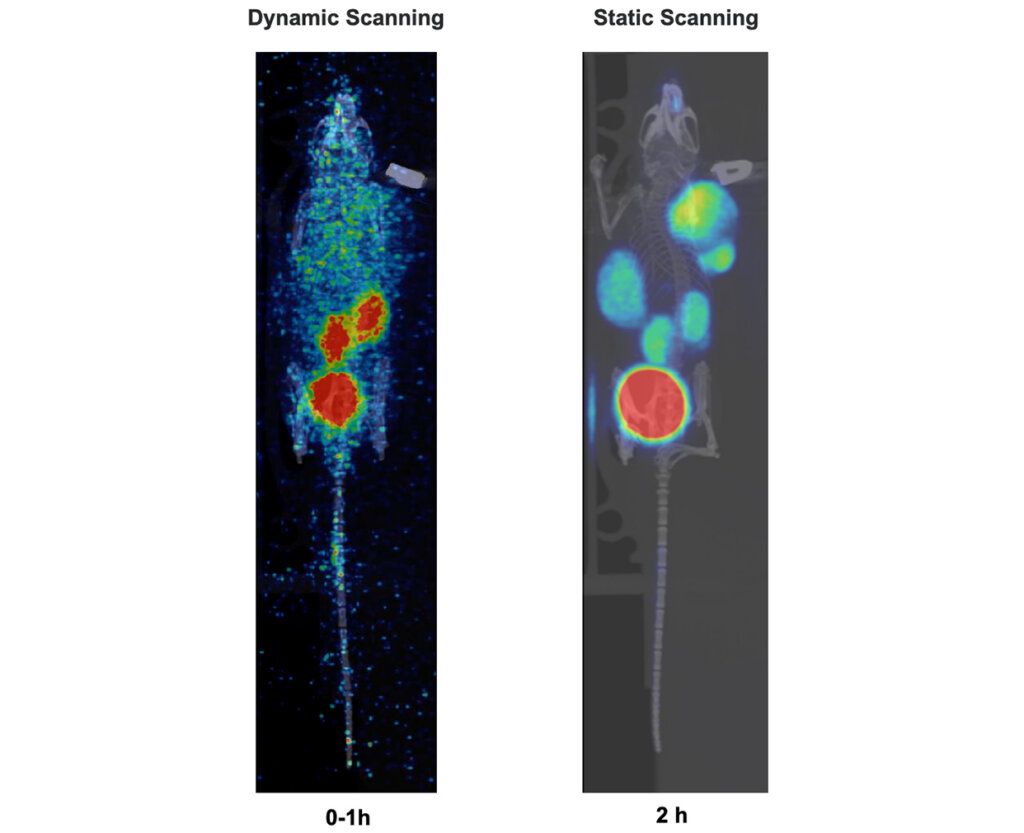
Biodistribution study by PET-CT
Mouse bearing bilateral tumors: 22RV1 (left) and LNCaP (right)
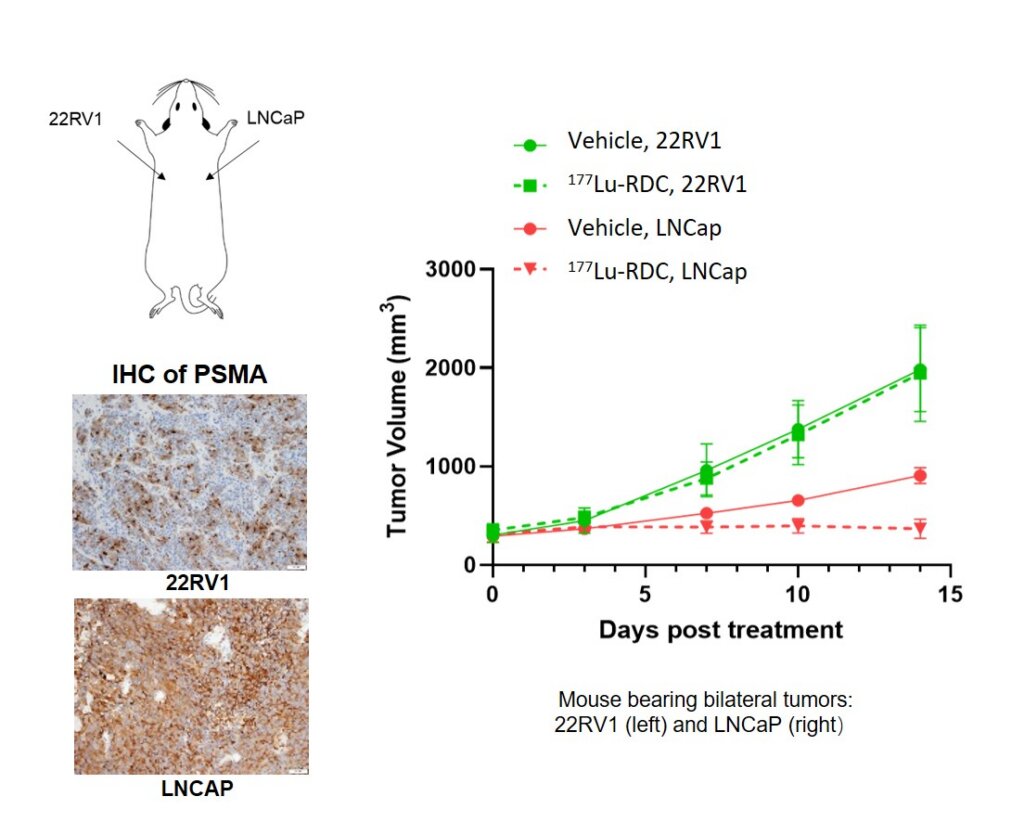
Efficacy study of 177Lu-RDC
Mouse bearing bilateral tumors: 22RV1 (left) and LNCaP (right)
