


AACR 2026 Posters: Sneak Peek
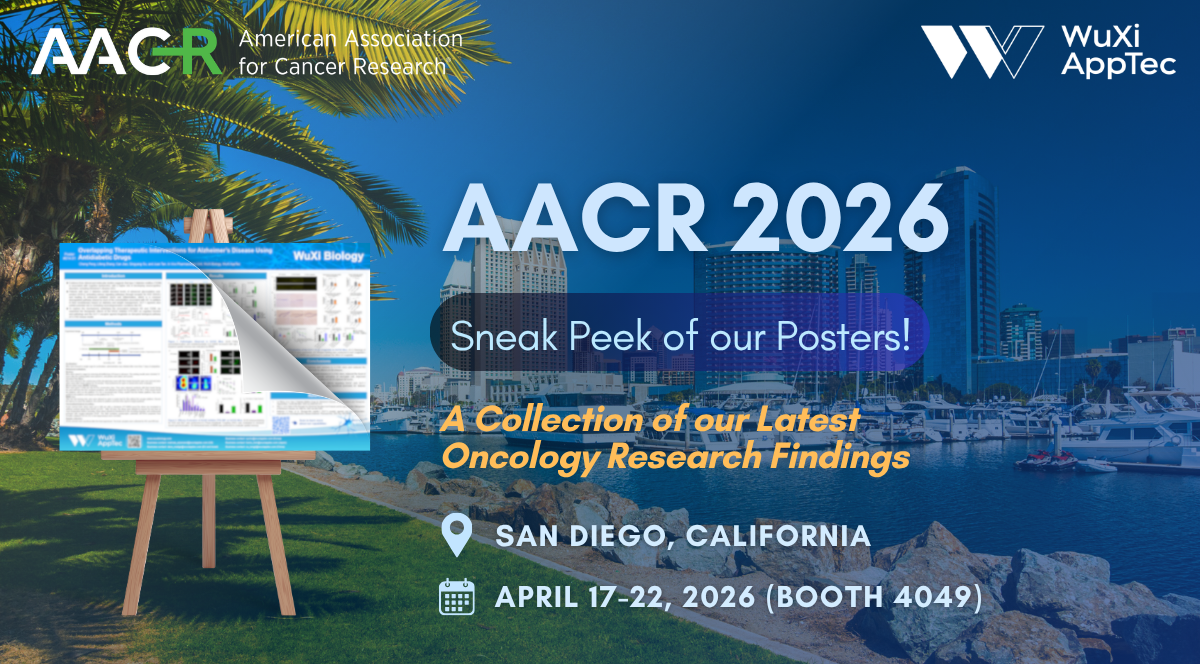
AACR 2026 Posters | Sneak Peek
The Annual Meeting of the American Association for Cancer Research (AACR) will be held in San Diego, USA, from April 17 to 22, 2026. As a leading global oncology conference, AACR brings cancer researchers together, accelerates breakthrough discoveries, and helps move lab technologies, innovative therapies, and research findings from the lab to the clinic—continually supporting global efforts to fight cancer.
At this event, scientists from the WuXi Biology platform will present a collection of the company’s latest oncology research findings, featuring 13 selected posters that focus on key areas, including integrated technology platforms for oncology drug discovery, the development of innovative therapies, and the elucidation of resistance mechanisms. WuXi Biology will share its explorations and discoveries in cancer research and engage with global peers to advance scientific progress and clinical translation in oncology.
PART 1: High-throughput Drug Discovery Integrated Technology Platform
WuXi Biology has built an end-to-end oncology R&D platform—covering high-throughput screening, multi-dimensional in vitro/in vivo pharmacology, and tissue toxicity assessment—to accelerate partner drug discovery and clinical translation.
Poster #3153 | An Integrated In Vitro Profiling Platform for the Simultaneous Assessment of Anti-Cancer Efficacy and Multi-Organ Toxicity
One major reason for the high attrition rate among oncology candidates is an insufficient understanding of the therapeutic index early in development; many molecules with promising efficacy later fail due to unanticipated safety issues. In this study, WuXi Biology developed an integrated in vitro profiling platform that combines a high-performance efficacy and mechanism module with a comprehensive early safety and toxicity module. The efficacy module assesses anti-tumor and anti-metastatic potential via high-throughput viability screening across multiple human cancer cell lines, functional phenotyping assays (e.g., angiogenesis, migration, invasion), and downstream molecular analyses. The toxicity module runs a range of assays in normal cell models to detect organ‑specific toxicities (liver, kidney, heart, nervous system) as well as mitochondrial, genetic, and phototoxic effects. The platform aims to identify efficacy and safety risks concurrently at an early stage to enable more efficient, lower‑risk candidate selection and clinical translation.
Session Category: Experimental and Molecular Therapeutics
Session Date | Time: Apr 20, 2026 | 2:00 PM-5:00 PM
Poster Location: Poster section 18, Poster board 21
Poster #1678 | Integrated ADC platform: from discovery to functional evaluation
Antibody‑drug conjugates (ADCs) have achieved notable success in oncology and are expanding into other areas such as autoimmune diseases, yet challenges remain, including the development of new payloads, antibody tumor penetration, and ADC uptake. WuXi Biology built a comprehensive ADC discovery platform that efficiently generates high-affinity antibodies against challenging targets, especially multi-pass transmembrane proteins, and combines this with high-throughput screening to accelerate antibody discovery. Our high-throughput conjugation platform can produce ADCs at the microgram–milligram scale with diverse linkers and payloads within 2–3 weeks; the resulting ADCs exhibit uniform drug-to-antibody ratios (DARs) and free-drug residues below 0.1%. The system enables the construction of hundreds of conjugate variants per run and the simultaneous testing of cytotoxicity and stability. The platform also delivers end-to-end services from payload evaluation and in vitro efficacy testing to mechanistic studies (e.g., antibody internalization and resistance development), supporting early‑stage ADC R&D and addressing emerging challenges in the field.
Session Category: Experimental and Molecular Therapeutics
Session Date | Time: Apr 20, 2026 | 9:00 AM-12:00 PM
Poster Location: Poster section 12, Poster board 7
Poster #6412 | Development of an Integrated High-Throughput Assay Platform for the Screening of Selective Integrin Inhibitors in Cancer
Integrins promote cancer cell invasion, survival in circulation, and metastatic outgrowth by activating pro-survival signaling pathways and remodeling the tumor microenvironment, making them attractive targets for cancer therapy. In this study, WuXi Biology developed an integrated high-throughput screening platform that combines cell-free fluorescence polarization assays with cell-based ELISA and IncuCyte competition binding assays to efficiently evaluate inhibitory activities of multiple modalities, including small molecules, peptides, antibodies, and ADCs, against several RGD‑binding integrins (αvβ1, αvβ3, αvβ5, αvβ6, αvβ8, α8β1). The platform also validates compound binding and functional activity using HEK293 cell lines stably overexpressing integrins and cancer cell lines with endogenous high integrin expression, confirming compound selectivity and potency in more physiologically relevant in vitro models and accelerating the discovery and optimization of integrin‑targeted anticancer agents.
Session Category: Chemistry
Session Date | Time: Apr 21, 2026 | 2:00 PM-5:00 PM
Poster Location: Poster section 39, Poster board 12
PART 2: R&D of New Modalities in Oncology
WuXi Biology focuses on translating molecular therapies into precision oncology, covering mRNA delivery, CAR-T, T-cell engagers (TCEs), targeted protein degradation (TPD), and combinations with immune checkpoint inhibitors. WuXi Biology advances development and mechanistic studies of these modalities to overcome current treatment limitations and deliver safer, more effective, and broadly applicable immune- and targeted-therapy strategies for clinical use.
Poster #5184 | From tLNP selection to in vitro/vivo efficiency evaluation: in vivo CAR-T therapy
Targeted lipid nanoparticle (tLNP)-mediated in vivo CAR-T technology can deliver CAR-encoding mRNA directly to T cells in the body, overcoming the complexity, long turnaround times, and high costs of traditional CAR-T manufacturing. In this study, WuXi Biology constructed both linear and circular CD19 CAR mRNAs and found that circular mRNA achieved higher transfection positivity, greater expression levels, and more durable expression; T cells transfected with circular CAR also showed stronger cytotoxicity against CD19+ Raji cells. WuXi Biology optimized a non‑functionalized LNP formulation that efficiently transfects activated T cells and developed targeted vectors (e.g., CD3‑tLNP, CD8‑tLNP) to enable efficient, selective delivery to activated T cells while reducing liver expression. In a PBMC-engrafted NALM-6 systemic model, in vivo delivery of CD19 CAR-T markedly suppressed tumor growth, extended survival, and durably depleted B cells. These results demonstrate that our integrated CAR-T development platform, from CAR mRNA design through tLNP selection and optimization to in vitro and in vivo efficacy evaluation, can accelerate the design and translation of in vivo CAR‑T therapies.
Session Category: Clinical Research
Session Date | Time: Apr 21, 2026 | 9:00 AM-12:00 PM
Poster Location: Poster section 40, Poster board 2
Poster #260 | EpCAM-CD3 Bispecific Antibody-Encoding mRNA Delivered by lung-targeted lipid nanoparticles suppresses orthotopic lung tumor growth
Bispecific T‑cell engagers (BiTEs) have shown great promise for treating malignancies but face manufacturing challenges and short serum half-lives. In contrast, mRNA therapeutics, when combined with targeted delivery, offer greater flexibility and lower cost. In this study, WuXi Biology developed a lung-selective organ-targeting lipid nanoparticle (SORT LNP) and formulated RNA (RNA‑LNP) encoding a T-cell-engaging bispecific antibody that binds the T-cell marker CD3 and bivalently targets the epithelial cell adhesion molecule (EpCAM). In vitro flow cytometry confirmed that the mRNA‑LNP effectively killed EpCAM‑positive tumor cells and activated human T cells. In a PBMC-engrafted NCI‑H441 orthotopic lung tumor model, the mRNA-LNP demonstrated significant antitumor efficacy. qPCR biodistribution confirmed lung-targeting specificity of the LNP, tumor-infiltrating T-cell activation analysis showed activation of intratumoral T cells, and histopathological examination of organs revealed no obvious adverse effects. The study demonstrates the potential value of lung‑targeted mRNA-LNPs encoding bispecific antibodies for the treatment of solid tumors.
Session Category: Experimental and Molecular Therapeutics
Session Date | Time: Apr 19, 2026 | 2:00 PM-5:00 PM
Poster Location: Poster section 12, Poster board 3
Poster #5786 | Novel Non-CRBN-based Molecular Glue Identification and Corresponding E3 Ligase Target Deconvolution through multi-Omics analysis
Targeted Protein Degradation (TPD) is regarded as a drug-discovery strategy that can address previously “undruggable” targets via the ubiquitin-proteasome system (UPS). Current efforts largely rely on classical E3 ligases such as CRBN, which constrains the range of targetable proteins. In this study, WuXi Biology constructed a molecular-glue library of approximately 5,000 compounds and performed primary screening using a GSPT1-HiBit cell line alongside a GSPT1-CRBN-KO control line, identifying over 100 potential hits, including both CRBN-dependent and CRBN-independent candidates. WuXi Biology then established a GSPT1-based proximity-labeling cell line for proteomics-driven target deconvolution, and validated candidate E3 ligases using an arrayed expression-manipulation strategy. Combined with in vitro and in vivo synthetic-lethality screens and transcriptomic/proteomic validation of degradable targets, this integrated discovery and deconvolution approach can advance the development of non‑CRBN molecular glues and novel TPD strategies.
Session Category: Experimental and Molecular Therapeutics
Session Date | Time:Apr 21,2026 | 2:00 PM-5:00 PM
Poster Location: Poster section 15, Poster board 13
Poster #5164 | Exploration of novel E3 ligase to support targeted protein degradation (TPD) drug discovery
TPD relies on E3 ligases to ubiquitinate and degrade target proteins. The human genome encodes at least 600 E3 ligases, yet the TPD field has so far relied mainly on two complexes, CUL4-CRBN and CUL2-VHL, which limit target diversity and specificity and raise concerns about resistance. In this study, WuXi Biology used a DNA‑encoded library (DEL) screening to identify GID4, the substrate receptor of the CTLH complex, as a ligandable E3 candidate. WuXi Biology developed GID4-binding small-molecule ligands and constructed BRD4-targeting PROTACs based on these ligands. The resulting PROTACs exhibited potent biochemical ternary binding and cellular degradation activity (EC50 < 1 nM; DC50 < 1 μM). Crystallography and direct-to-biology (D2B) high‑throughput optimization further elucidated the mechanism and improved degradation efficacy, demonstrating that DEL-based affinity screening can drive the development of TPD strategies targeting non‑traditional E3 ligases such as GID4.
Session Category: Chemistry
Session Date | Time: Apr 21, 2026 | 9:00 AM-12:00 PM
Poster Location: Poster section 39, Poster board 14
Poster #1553 | Combining PD-1 Blockade with DLL3-Targeted T Cell Engager Potentiates Antitumor Efficacy in Small Cell Lung Cancer
Small cell lung cancer (SCLC) is an aggressive neuroendocrine malignancy with high malignancy and poor prognosis; it commonly relapses after immune checkpoint blockade. DLL3 is highly expressed on the surface of SCLC cells but has low expression in normal tissues, making it an ideal target for TCEs. However, limited immune infiltration and an immunosuppressive tumor microenvironment constrain the efficacy of TCE. WuXi Biology found that combining a DLL3-targeted TCE with PD-1 blockade markedly enhances antitumor immune responses against SCLC. In PBMC-humanized mouse models, the combination therapy outperformed TCE monotherapy against xenografts with both high and low DLL3 expression. Mechanistically, the combination treatment significantly increased intratumoral infiltration of human CD45+ immune cells. TCE monotherapy induced upregulation of PD-1 on tumor-infiltrating T cells, which was reversed by PD-1 blockade, thereby improving the immunosuppressive microenvironment, promoting T-cell priming and activation, and enhancing cancer cell–T‑cell recognition. These results provide strong preclinical support for combining DLL3-targeted TCEs with immune checkpoint inhibitors in the treatment of SCLC.
Session Category: Immunology
Session Date | Time: Apr 20, 2026 | 9:00 AM-12:00 PM
Poster Location: Poster section 8, Poster board 7
Poster #4804 | Synchronously implanted cold tumor abrogates anti-PD-1 response of hot tumor in a syngeneic mouse model
Synchronous cancer refers to a new or second primary tumor that arises at the same time as the first primary tumor, occurring in the same or a different organ, with a similar molecular basis, and is not considered a metastatic relapse. Synchronous cancers occur in 4.5%-11.7% of patients with multiple primary malignancies, but the impact of a second primary tumor on the progression and treatment response of the first tumor remains unclear. In this study, WuXi Biology established a synchronous syngeneic mouse model with MC38 colorectal cancer (a “hot” tumor) and LL/2 lung cancer (a “cold” tumor) to investigate how the presence of LL/2 affects anti-PD-1 therapy against MC38. The results showed that mice bearing concurrently implanted LL/2 tumors showed markedly reduced responses of MC38 tumors to anti-PD-1 treatment, with significantly increased tumor volumes and no significant changes in body weight. Flow cytometry and cytokine analyses confirmed that alterations in immune profiles underlie the MC38 tumor’s resistance to immunotherapy. These results demonstrate that a second primary tumor can modulate the immune environment and affect the first tumor’s response to immune checkpoint inhibitors, highlighting the need to assess tumor-to-tumor interactions when designing treatment strategies for patients with synchronous cancers.
Session Category: Tumor Biology
Session Date | Time: Apr 21, 2026 | 9:00 AM-12:00 PM
Poster Location: Poster section 25, Poster board 22
PART 3: Mechanistic Studies of Tumor Drug Resistance and Strategies to Overcome It
WuXi Biology continues to address key scientific questions about drug resistance in clinical oncology. Focusing on commonly used targeted agents-such as antibody-drug conjugates (ADCs), BTK inhibitors, KRAS inhibitors, and BCL-2 inhibitors-the team builds in vitro and in vivo tumor models that closely mimic clinical resistance phenotypes to elucidate molecular resistance mechanisms and develop therapeutic strategies to reverse or overcome resistance.
Poster #2955 | Systematic mechanistic profiling of ADC-resistant cancer cell lines
ADC has become a hotspot for targeted therapy development across many cancers, but resistance severely limits its clinical efficacy, and resistant cell lines are important models for dissecting resistance mechanisms. In this study, WuXi Biology established several ADC-resistant cell lines by chronic, escalating ADC exposure. Among them, most models exhibited>10-fold increases in IC50 compared with parental cells. Proteomic and molecular analyses of Enhertu- and Trodelvy-resistant lines revealed that in HCC1954, Enhertu-resistant cells HER2 mRNA and protein were markedly downregulated (~30 fold), and these cells were also resistant to other HER2-targeting ADCs but remained sensitive to the free payloads, confirming HER2 downregulation as a key resistance mechanism in this model. The other three resistant models did not show significant target downregulation, suggesting diverse resistance mechanisms across different ADCs and cancer cell lines.
Session Category: Experimental and Molecular Therapeutics
Session Date | Time: Apr 20, 2026 | 2:00 PM-5:00 PM
Poster Location: Poster section 12, Poster board 1
Poster #7114 | Therapeutic Potential of BTK-targeted Degrader in B-Cell Malignancies Harboring Ibrutinib-Resistant Mutation
Ibrutinib is an important treatment for B-cell malignancies, but resistance mutations such as C481S and L528W prevent its covalent binding to BTK, leading to reduced efficacy and disease progression. Novel therapeutic strategies are urgently needed for patients with ibrutinib-resistant mutations, and targeted protein degradation offers a new approach to overcome ibrutinib resistance. In this study, WuXi Biology evaluated the efficacy of the novel CRBN E3 ligase‑- mediated BTK degrader Bexobrutideg (NX-5948). In vitro, the compound showed potent antiproliferative activity against both ibrutinib-sensitive and ibrutinib-resistant B-cell malignancy models, including those harboring BTK C481S and L528W mutations. In vivo, NX‑5948 significantly inhibited tumor growth in xenograft models bearing these resistance mutations. These results indicate that BTK degraders could overcome resistance by eliminating mutant BTK and represent a potential therapeutic strategy for B‑cell malignancies.
Session Category: Experimental and Molecular Therapeutics
Session Date | Time: Apr 22, 2026 | 9:00 AM-12:00 PM
Poster Location: Poster section 14, Poster board 3
Poster #1863 | Development and Characterization of the Venetoclax-Resistant AML Model to Enable Preclinical Drug Discovery
Venetoclax is an important therapy for acute myeloid leukemia (AML), but resistance limits its long-term efficacy, creating an urgent need for preclinical resistant models. In this study, WuXi Biology generated two Venetoclax-resistant AML cell lines (Ven-R-MV4-11 and Ven-R-MOLM-13) by prolonged in vitro exposure to Venetoclax and found marked upregulation of the anti-apoptotic protein MCL-1 in the resistant cells. In vitro viability assays showed strong synergy between Venetoclax and the MCL-1 inhibitors AMG-176 and MIK665 in the resistant lines. In vivo, both resistant models exhibited significant resistance to Venetoclax alone and to the standard Venetoclax and azacitidine combination, as well as faster tumor growth. MIK665 combined with Venetoclax and azacitidine effectively overcame resistance in the Ven-R-MV4-11 model. These two AML drug-resistant models provide important tools for dissecting mechanisms of BCL-2 inhibitor resistance and for developing novel therapeutics.
Session Category: Experimental and Molecular Therapeutics
Session Date | Time:Apr 20,2026 | 9:00 AM-12:00 PM
Poster Location: Poster section 18, Poster board 23
Poster #1888 | Unveiling Mechanisms of MRTX1133 Resistance in PDAC Models
MRTX1133 is the first covalent KRAS G12D inhibitor to enter clinical evaluation and has raised new hopes for treating pancreatic ductal adenocarcinoma (PDAC), but resistance has emerged as a clinical challenge, and its mechanisms remain unclear. In this study, WuXi Biology generated MRTX1133-resistant cell lines in KRAS G12D mutant models by stepwise dose escalation. The resistant cells maintain stable resistance to MRTX1133 both in vitro and in vivo, show broad cross-resistance to other KRAS G12D inhibitors, and exhibit partial resistance to a pan-RAS inhibitor. Bioinformatic analyses revealed diverse resistance mechanisms, including altered oncogenic signaling networks, upregulation of cell-cycle and drug-efflux regulators, and epithelial–mesenchymal transition (EMT). The MRTX1133-R-GP2D model acquired secondary KRAS mutations (H95Q, Y96H, Y96N, D92N), indicating on-target resistance, whereas the MRTX1133‑R‑KPC model displayed chromosome 5 amplifications encompassing metabolic/detoxification genes (notably CYP51 and CYP3A) alongside tumor microenvironment reprogramming and immune evasion. WuXi Biology also found that targeting core vulnerabilities such as the cell cycle and DNA damage-repair pathways can overcome resistance. The established resistant models provide physiologically relevant platforms for biomarker discovery and the development of rational combination therapies.
Session Category: Experimental and Molecular Therapeutics
Session Date | Time:Apr 20,2026 | 9:00 AM-12:00 PM
Poster Location: Poster section 19, Poster board 21
We look forward to connecting with you in San Diego! Stop by Booth 4049 and learn how our integrated platforms support the discovery of next-generation cancer therapies.
Related Content
At AACR 2026, scientists from our WuXi Biology platform will present a collection of the company’s latest oncology research findings...
VIEW RESOURCEUnlike conventional protein-targeted therapies, which often provide only transient effects, nucleic acid therapeutics have the potential for long-lasting effects and...
VIEW RESOURCE