


mTOR Inhibition Enhances Targeted Protein Degradation Efficacy
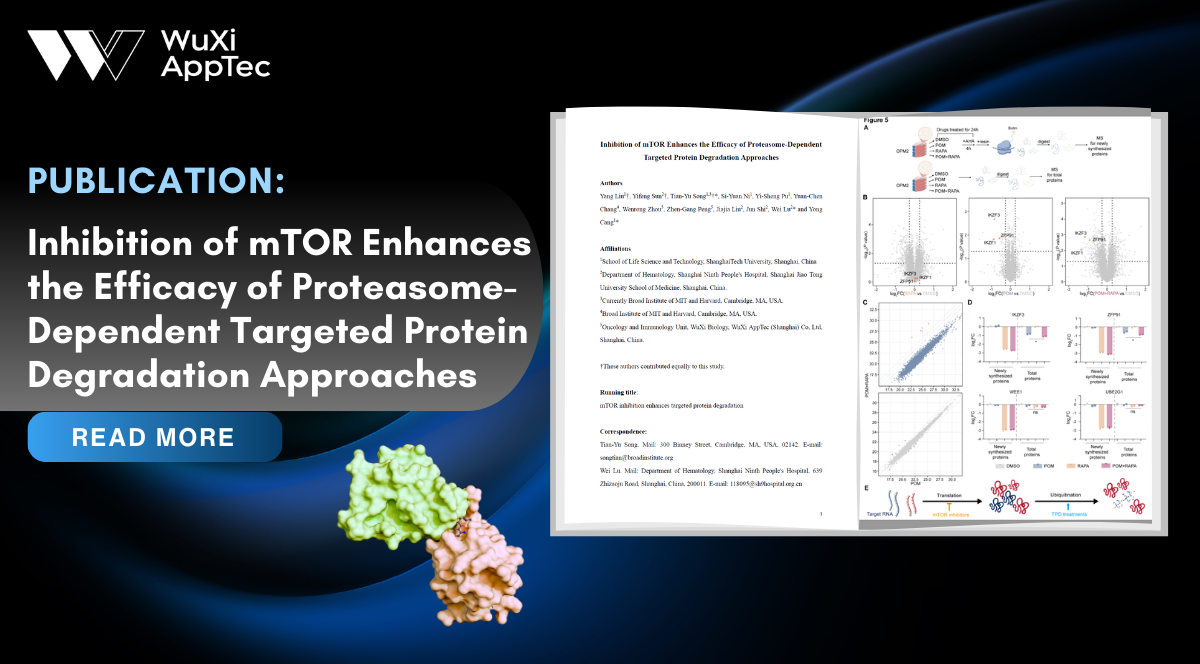
Targeted protein degradation (TPD) approaches, including molecular glue degraders (MGDs) and proteolysis targeting chimeras (PROTACs), can overcome traditional occupancy-based inhibitor limitations and facilitate therapeutic development against “undruggable” disease-causing proteins. However, resistance to TPD is common, highlighting the need to further understand the driving mechanisms to improve treatment efficacy.
In a publication in the journal Cancer Research, WuXi AppTec scientists contributed to a study that identified a critical role of mTOR signaling in regulating PROTAC and MGD efficacy. The authors show that mTOR inhibition suppressed de novo protein synthesis, thus creating a synthetic vulnerability by depleting replenishment of proteins targeted by PROTACs or MGDs. When applied to myeloma, mTOR inhibitors restored sensitivity to pomalidomide, one of the best characterized MGDs. This study reveals a potentially translatable strategy that combines mTOR inhibitors with MGDs or PROTACs to enhance the therapeutic index of targeted protein degradation.
Related Content
Many oncology drug candidates with promising preclinical activity ultimately fail because safety liabilities emerge too late in development. An integrated...
VIEW RESOURCEBispecific antibodies have emerged as an important modality in oncology, although their broader application can be limited by manufacturing complexity...
VIEW RESOURCE